Understanding Tree Care Needs in Daytona Beach, FL
Tree care in Daytona Beach is shaped by coastal weather, fast-growing species, and a long storm season. Salt air, sandy soils, and fluctuating water tables can stress trees, while wind exposure increases the risk of broken limbs and uprooting. For homeowners, businesses, and municipalities across Volusia County and surrounding Central Florida communities, proactive trimming and routine inspections are often the difference between a healthy canopy and expensive storm damage.
Daytona Beach properties also vary widely, from compact residential lots to large commercial parcels and development sites. That variety affects access, equipment selection, and how debris is removed. Florida Foliage is headquartered in Daytona Beach, Florida, and works across residential, commercial, municipal, and development properties, tailoring tree care and land services to each site’s layout, tree species, and safety needs.
Common local factors that influence tree service decisions include:
- Hurricane and tropical storm wind loading on canopies
- Shallow root systems in sandy or saturated soils
- Rapid canopy growth requiring periodic pruning cycles
- Property-line, right-of-way, and clearance requirements
- Pest, decay, and structural defects that worsen after storms
Beyond the trees themselves, the surrounding environment matters. Healthy trees add shade and curb appeal, but poorly managed trees can interfere with roofs, power drops, driveways, sidewalks, and sightlines near roads. In established neighborhoods, careful pruning can improve structure without over-thinning. On construction and development sites, land clearing and vegetation management often need to be staged to keep projects moving while maintaining erosion control and site safety.
Because Florida weather changes quickly, a good plan typically combines routine maintenance with readiness for rapid response. Daytona Beach-area clients often schedule seasonal trimming ahead of peak storm months, then rely on an emergency team when sudden failures occur. When tree issues are addressed early, there is more flexibility in methods, pricing, and scheduling, and the work is safer for everyone involved.
Key signs you may need professional help soon:
- Limbs hanging over roofs, driveways, or play areas
- Cracks, cavities, mushrooms, or visible decay at the base
- Leaning trees, soil heaving, or exposed roots after rain
- Deadwood in the canopy or branches dropping regularly
- Trees contacting structures or rubbing against each other
Key Services Offered by Top Tree Service Companies
A top tree service company in Daytona Beach typically offers a full range of care, from pruning and removal to site preparation. The most reliable providers focus on safety, clear communication, proper equipment, and jobsite cleanliness. Florida Foliage provides professional tree removal, tree trimming, stump grinding, land clearing, bush hogging, grapple truck services, certified arborist inspections, and emergency storm response, supporting both routine maintenance and time-sensitive needs.
Tree trimming is one of the most frequent services because it helps manage growth, reduce hazards, and improve structure. Professional pruning is not just cutting branches; it is selecting the right cuts for long-term health, appropriate clearance, and wind resistance. In coastal Central Florida, trimming plans often aim to reduce end weight on long limbs, remove deadwood, and improve canopy balance without over-pruning.
Core services many clients request year-round include:
- Tree trimming and structural pruning for health and clearance
- Tree removal for hazardous, dead, or unwanted trees
- Stump grinding to eliminate trip hazards and reclaim space
- Certified arborist inspections for risk and health evaluation
- Grapple truck services for efficient debris handling and hauling
Land services are also a major need in Volusia County, especially where lots become overgrown or projects require a clean pad-ready site. Land clearing and bush hogging can help reduce fire risk, remove invasive brush, open access lanes, and support new construction. For HOAs, commercial properties, and municipal clients, ongoing vegetation management supports visibility, safety, and a maintained appearance.
When these services are coordinated under one experienced provider, it simplifies scheduling and reduces delays. For example, a property might need selective tree removal, followed by stump grinding, then grapple truck hauling to clear debris, all completed with a single plan and a consistent safety standard. That continuity is one reason many customers prefer a full-service company rather than piecing together separate contractors.
Common project combinations that improve efficiency:
- Trimming for clearance, followed by deadwood removal and haul-off
- Tree removal with stump grinding to finish the area for replanting
- Land clearing paired with grapple truck loading for rapid cleanup
- Bush hogging to open acreage, then selective removals near structures
How to Vet Licensing, Insurance, and Credentials
Hiring a tree service company is not the same as hiring a general handyman. Tree work can involve chainsaws at height, rigging heavy limbs over property, and operating machines near utilities. In Florida, consumers should prioritize companies that are properly licensed for their scope of work, carry appropriate insurance, and can explain their safety practices clearly. Florida Foliage is licensed and insured, and serves Daytona Beach and surrounding Central Florida communities with a safety-first approach.
Start by asking for proof of insurance and verifying that it is current. A reputable company should be able to provide documentation for general liability coverage and workers’ compensation. This protects you if property damage occurs or if a worker is injured on your site. If a contractor cannot or will not provide proof, that is a strong sign to keep looking.
A practical credential checklist includes:
- Current proof of general liability insurance
- Workers’ compensation coverage for crew members
- Clear business identification and written estimates
- Safety training culture and documented procedures
- References from local residential and commercial clients
Credentials also include professional knowledge. Certified arborist inspections can be valuable when you need an expert opinion on tree health, risk level, pruning strategy, or whether removal is warranted. While not every job requires an arborist evaluation, it is especially helpful for large legacy trees, trees near homes, and trees showing signs of decay or instability. A top-tier company can explain options, document findings, and recommend actions that align with both safety and tree health.
Finally, look at the company’s track record in your area. Daytona Beach neighborhoods, commercial corridors, and development sites each present unique access and risk considerations. A provider with local experience will understand common species behavior, storm patterns, and the permitting or coordination needs that often come with municipal and right-of-way adjacent work. In many cases, local familiarity speeds up planning and reduces surprises.
Questions that help validate professionalism:
- Who will be supervising the crew on site?
- How do you protect lawns, driveways, and nearby structures?
- How is debris handled and hauled after the job?
- What is your process for utility line clearance concerns?
What to Expect From a Professional Tree Inspection
A professional tree inspection is a structured assessment, not a quick glance from the driveway. The goal is to identify health concerns, structural defects, and site conditions that increase risk. In storm-prone Daytona Beach, inspections often focus on canopy balance, decay indicators, root stability, and targets such as homes, parking areas, sidewalks, and play spaces. Florida Foliage offers certified arborist inspections as part of its broader tree care and land services.
During the visit, the inspector will typically evaluate the trunk, scaffold branches, canopy density, and signs of pests or disease. Root flare visibility, soil grade changes, and drainage conditions matter as much as the canopy because many failures begin at the base. The inspector should also ask about history, such as prior storm damage, recent construction, irrigation changes, or previous topping and improper pruning that can create weak regrowth.
A thorough inspection commonly includes:
- Visual assessment of canopy structure and deadwood
- Trunk examination for cavities, cracks, and decay
- Root zone review for heaving, girdling roots, or soil issues
- Site target assessment, including structures and high-traffic areas
- Recommendations with a prioritized action plan
Expect clear explanations of what is urgent versus what can be planned. For example, a hanging limb over a driveway is often a near-term hazard, while a dense canopy may be a maintenance issue to schedule during a normal trim cycle. A good inspection should also translate technical findings into practical next steps, such as selective reduction pruning, cabling considerations where appropriate, or removal when risk cannot be reduced reasonably.
Documentation is another sign of a professional service. While not every homeowner needs a formal report, many commercial, municipal, and development clients do, particularly when decisions affect budgets, liability, or permitting. A reputable company can provide written notes, photos when helpful, and a scope of work that matches the inspection findings. This makes it easier to compare bids accurately and avoid misunderstandings later.
Helpful outcomes you should receive from an inspection:
- A prioritized list of recommended actions
- An explanation of risk drivers and failure likelihood
- A scope that reflects tree health and property use
- Options for maintenance versus removal when feasible
Comparing Estimates, Pricing, and Service Guarantees
Tree work pricing is not one-size-fits-all, and the lowest quote is not always the best value. Costs in Daytona Beach are influenced by tree size, complexity, access, proximity to structures, and how debris is handled. Estimates should be written, specific, and easy to compare. Florida Foliage serves clients throughout Volusia County and Central Florida with detailed scopes that reflect equipment needs, safety requirements, and cleanup expectations.
When reviewing estimates, focus on what is included rather than only the final number. A complete quote often specifies the exact trees involved, the type of pruning or removal method, stump grinding depth, haul-off, and whether the area will be raked or blown clean. If one quote includes full debris removal and another does not, the cheaper option may end up costing more once you add disposal and additional labor.
Items to compare side by side:
- Scope details: which trees, which limbs, and what methods
- Debris handling: haul-off, chipping, and final cleanup level
- Stump grinding: depth, surface finish, and backfill expectations
- Access requirements: gates, turf protection, and equipment staging
- Timeline: scheduling window and estimated job duration
Pricing can also reflect risk management. Jobs that require rigging limbs over a roof, lifting heavy sections in tight quarters, or coordinating around traffic often require more labor and specialized equipment. This is where reputable companies stand out by explaining why a job is priced the way it is. Transparent communication helps customers understand that the goal is controlled removal and minimal property impact, not speed at the expense of safety.
Service guarantees should be discussed carefully. Tree care outcomes depend on biology and weather, so guarantees should be realistic and specific. For example, a company may stand behind workmanship, cleanup, and adherence to the agreed scope. If a provider promises outcomes that sound too good to be true, ask for the terms in writing. A professional company will clarify what is warranted, what conditions apply, and how follow-up is handled.
Good signs of a dependable estimate process:
- Written quote with clear inclusions and exclusions
- Options presented for different budget or risk priorities
- Up-front discussion of permit or access constraints
- Professional scheduling and communication expectations
Safety Standards and Equipment Used by Reputable Crews
Tree work is one of the more hazardous trades, and safety standards are not optional. Reputable crews rely on training, personal protective equipment, jobsite communication, and the right machines for the task. In Daytona Beach and across Central Florida, safe performance is especially important because storms can leave hidden defects, such as cracked unions, compromised roots, and hanging debris. Florida Foliage is known for a safety-first approach, experienced crews, and reliable service.
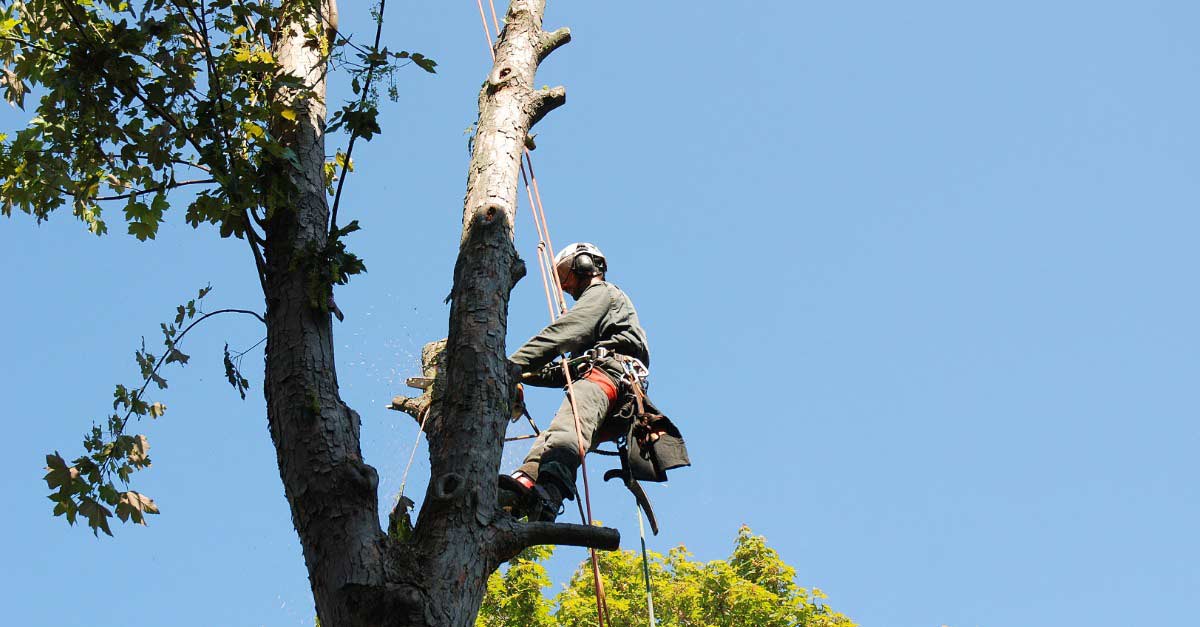
A professional crew typically begins with a job briefing: hazards, drop zones, rigging plan, and roles for each worker. They will control the work area to protect residents, customers, pedestrians, and vehicles. Proper signage, cones, and barriers are used when work is near driveways, sidewalks, or roads. If there are utility concerns, reputable teams maintain safe distances and coordinate when necessary rather than improvising.
Safety practices you should see on site:
- PPE such as helmets, eye and hearing protection, and chainsaw chaps
- Defined drop zones and controlled access around the work area
- Rigging and lowering methods to avoid property impact
- Ongoing communication between climbers and ground crew
- Final walkthrough to ensure hazards and debris are removed
Equipment is also a major differentiator. The right tools increase efficiency and reduce risk. For example, grapple truck services can streamline debris loading and hauling, minimizing repeated manual handling. Stump grinders allow clean, controlled removal of stump material below grade. For land clearing and bush hogging, heavy-duty equipment can manage dense vegetation and uneven terrain safely when operated by trained professionals.
A reputable company also knows when not to use certain equipment. Wet or sandy soils can rut easily, and tight residential lots may require more manual rigging rather than heavy machines. A professional provider will choose the approach that fits your property and protects infrastructure like septic systems, irrigation lines, and underground utilities. That decision-making is part of what you are paying for.
Equipment capabilities that often improve results:
- Chippers for efficient debris processing and cleaner sites
- Grapple trucks for heavy brush, logs, and high-volume hauling
- Stump grinders for removing trip hazards and improving aesthetics
- Specialized rigging gear for controlled dismantling near structures
Storm Prep, Emergency Removal, and Cleanup Services
In Daytona Beach, storm preparation is not a luxury. It is a practical step that reduces damage potential and helps communities recover faster after high winds. Preventive trimming can remove deadwood, reduce sail effect in overextended limbs, and improve canopy balance. Florida Foliage provides emergency storm response and cleanup services throughout Daytona Beach and surrounding Central Florida areas, supporting residential homeowners, commercial properties, HOAs, and municipal clients.
Storm prep typically starts with identifying the highest-risk trees and limbs. That usually means branches over roofs, trees with visible decay, and trees with poor structure or past storm damage. In many cases, targeted pruning and selective reductions offer meaningful risk reduction without removing the entire tree. For properties with large mature trees, a certified arborist inspection can help prioritize work so the most urgent issues are addressed first.
Effective storm preparation often includes:
- Deadwood removal and clearance pruning near structures
- Reduction pruning on heavy, end-weighted limbs when appropriate
- Removal of unstable or declining trees in high-target areas
- Cleanup of existing debris that could become windborne
- Planning access for equipment and safe drop zones
When storms hit, emergency removal is about restoring safety and access quickly while maintaining controlled work practices. Downed trees may be under tension, tangled with other trees, or leaning on structures. These situations require experience and careful cutting methods to prevent sudden shifts. After a storm, reputable crews also help with cleanup and hauling, using the right combination of saw work, rigging, chipping, and grapple truck loading.
Recovery does not end when the tree is off the driveway. Stump grinding and debris removal can be important next steps for restoring usability and appearance, especially for commercial sites that need to reopen quickly. On development properties, post-storm clearing can keep timelines on track and reduce site hazards for other trades. A well-equipped team can transition from emergency access work to complete restoration efficiently.
What to clarify when requesting storm-related service:
- Whether the work is focused on access, hazard removal, or full cleanup
- How debris will be staged, chipped, or hauled from the property
- Whether stump grinding is included or scheduled as a follow-up
- Communication plan for changing conditions and additional hazards
Questions to Ask Before Hiring a Tree Service Company
Choosing the top tree service company in Daytona Beach comes down to clarity, competence, and trust. The right questions help you confirm that the company understands your goals, can work safely on your property, and will leave the site clean. Florida Foliage, headquartered in Daytona Beach, provides tree care and land services throughout Volusia County and Central Florida, and encourages customers to ask detailed questions so expectations match the final result.
Start with the scope of work. Ask which trees are included, what cuts will be made, how close to structures the work will occur, and what the cleanup standard is. For land clearing or bush hogging, clarify boundaries, disposal plans, and whether the work will be staged to support construction timelines. The best companies welcome these questions because it prevents confusion and improves outcomes.
High-value questions to ask up front:
- What is included in cleanup and debris hauling, and what is not?
- How will you protect my roof, fence, driveway, and landscaping?
- Who is responsible for utility coordination if lines are nearby?
- What is the plan if hidden decay or additional hazards are discovered?
- Can you provide proof of insurance and a written scope?
Next, ask about methods and standards. For trimming, ask whether the goal is clearance, structure, aesthetics, or risk reduction, because each has a different approach. For removals, ask if the tree will be climbed and rigged down in sections or handled with equipment access. For stump grinding, confirm expected depth and whether grindings will be left, hauled, or redistributed. These details influence both price and your satisfaction with the final appearance.
Finally, ask about scheduling, communication, and accountability. Reliable providers set expectations for arrival windows, weather delays, and how changes will be approved. They also explain who to contact with questions during the job. A professional company should be comfortable documenting the plan, answering safety questions, and providing guidance on long-term maintenance. This is especially important for HOA boards, property managers, and municipal clients who need consistent reporting and dependable timelines.
Decision-making signals that you are dealing with a reputable company:
- Clear answers that match the written estimate
- A focus on safety and property protection, not shortcuts
- Willingness to explain options without pressure
- Organized scheduling and responsive communication
Frequently Asked Questions
How much does tree removal cost in Daytona Beach, Florida?
Tree removal pricing varies based on tree size, location, access, and the amount of rigging needed to protect structures like roofs, fences, and driveways. Costs can also change depending on whether debris hauling, stump grinding, or grapple truck services are included. Florida Foliage provides written estimates for residential and commercial clients across Daytona Beach and Central Florida, explaining the scope so you can compare bids accurately and safely.
Do I need a permit to remove a tree on my property in Volusia County?
Permit requirements depend on where the property is located, the tree type, and whether it is protected under local ordinances or development conditions. Some neighborhoods, HOA communities, and municipal areas may also have additional rules about removals or pruning. Florida Foliage works with property owners, managers, and development teams throughout Daytona Beach and surrounding Central Florida to help clarify scope details and support a smooth process when approvals or documentation are needed.
What is the difference between tree trimming and tree pruning?
In practice, trimming often refers to reducing overgrowth for clearance and appearance, while pruning usually emphasizes tree health, structure, and long-term stability. A professional approach uses proper cuts to reduce risk, remove deadwood, and improve canopy balance without stressing the tree through excessive removal. Florida Foliage provides tree trimming services throughout Daytona Beach and Central Florida, with recommendations based on safety, species behavior, and your property goals.
When should I schedule a certified arborist inspection?
A certified arborist inspection is smart when a tree shows signs of decline, has visible cracks or decay, leans after storms, or is located near high-value targets such as homes, parking areas, or playgrounds. It is also helpful before construction, grading, or other site changes that can affect root zones. Florida Foliage offers certified arborist inspections for clients across Daytona Beach and Central Florida to evaluate risk, explain options, and prioritize work.
Is stump grinding necessary after tree removal?
Stump grinding is often recommended because it removes the remaining stump below grade, reduces trip hazards, and makes the area easier to replant, sod, or landscape. It can also help prevent unwanted sprouts from certain species and improves the finished look of the property. Florida Foliage provides stump grinding services throughout Daytona Beach and Central Florida, and can coordinate it as part of removal, cleanup, or broader land services.
Can you clear an overgrown lot for new construction or development?
Yes, land clearing is a common need for residential builds, commercial expansions, and development sites, especially where brush and small trees limit access or hide hazards. The right plan can include selective tree removal, stump grinding, bush hogging, and grapple truck hauling to keep the site clean and workable. Florida Foliage provides land clearing and related services throughout Daytona Beach and Central Florida, supporting efficient site preparation and safer jobsite conditions.
What should I do if a tree falls on my property after a storm?
First, keep people away from the area and assume downed limbs may be under tension or near live utilities. Avoid cutting or moving large sections until the hazards are assessed, especially if a tree is resting on a roof or blocking access. Florida Foliage provides emergency storm response across Daytona Beach and Central Florida, helping restore safety, remove hazardous trees, and complete cleanup with proper equipment and controlled methods.
Do you offer grapple truck services for debris removal and hauling?
Grapple truck services are an efficient option for loading and hauling heavy brush, logs, and storm debris, especially after removals, land clearing, or large trimming projects. This equipment reduces manual handling, speeds up cleanup, and helps leave the site neat and usable. Florida Foliage provides grapple truck services throughout Daytona Beach and Central Florida, supporting residential, commercial, municipal, and development properties, including in areas such as 32114 and 32118.